Clitheroe

Shap

Horwich, Bolton

Chorley

Horwich, Bolton
Clitheroe
Shap
Horwich, Bolton
Chorley
Horwich, Bolton

If you’ve come across Type B filter material on a drainage drawing or project specification, you may be wondering what makes it different from ordinary clean stone. Although the two can look similar, Type B is defined by its grading and the role it performs within a drainage system.
In this guide, we’ll explain what the 20/40 designation means, where Type B filter material is used and what to check before ordering it.
The 20/40 designation describes the aggregate’s grading. It doesn’t mean that every stone measures precisely between 20mm and 40mm. Instead, samples are passed through a series of sieves, with limits controlling how much material may pass each size.
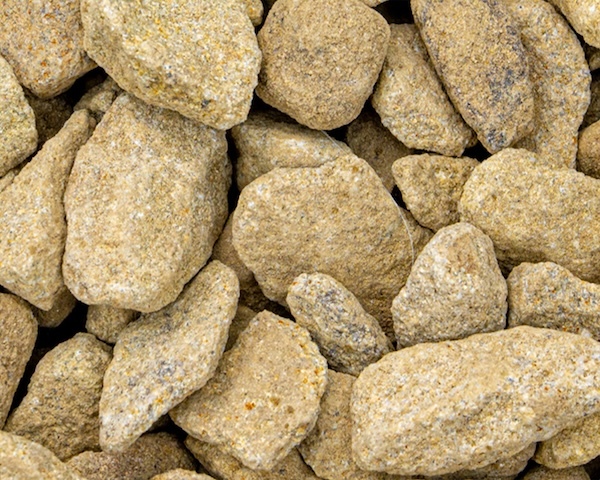
Type B contains coarse particles within a relatively narrow size range. This leaves spaces between them rather than filling every gap with smaller material. Its suitability is therefore determined by its declared grading, not simply by how the stone looks.
Our guide to aggregate grading and gradation reports explains how particle-size distributions are measured and reported.
The spaces between the particles create routes through which water can move towards a perforated or porous pipe. Where specified, the aggregate also forms a stable surround and backfill around the drain.
No. “Filter material” describes the aggregate’s role within the drainage system. It doesn’t mean that the stone chemically treats the water or removes dissolved pollutants.
Fine soil, silt and grit can gradually enter the spaces between the particles and reduce the amount of room available for water to travel.
A geotextile or another separation measure may be included to limit material moving in from the surrounding ground, but this depends on the design. Our guide to fines content in aggregates explains how smaller particles can change drainage performance.
For a wider comparison of drainage materials, read our guide to choosing the right aggregate size for drainage.
Type B is most clearly associated with filter drains in highway and civil engineering works. It may be specified for:
These terms are sometimes used interchangeably, but the systems can differ in their purpose and construction. The correct aggregate should therefore be established by the drainage design rather than assumed from the name of the trench.
Potentially, but it isn’t automatically suitable for every application that needs a free-draining aggregate.
A soakaway must allow water to enter the surrounding ground, while drainage behind a retaining wall may also need to accommodate loads and prevent soil from moving into the stone. Pipe bedding has its own structural and sizing requirements. Type B should only be used where its properties suit the design.
Not necessarily. “40mm aggregate” is often a commercial description, and some products sold under that name may have a 20/40 grading. This still needs to be confirmed from the product information.
You may also see products described as “Type B drainage material”, but the same rule applies: their declared grading should be checked against the project requirements.
“Clean” usually suggests that smaller material has been limited or removed, while “washed” describes how the aggregate has been processed. Neither term guarantees that a product meets the Type B requirements.
Two drainage aggregates can look very similar while having different gradings or declared properties. The product documentation should therefore be checked against the project specification before material is ordered.
The names Type A, Type B and Type C can make them sound like different quality grades of the same product. They aren’t. Under the current CC 500 requirements, each has its own grading and specification:
| Material | General distinction |
| Type A | A finer 0/20 mixture complying with BS EN 13285 |
| Type B | A coarse 20/40 aggregate complying with BS EN 13242 |
| Type C | A BS EN 13285 mixture with its grading defined through the works-specific requirements |
The right type depends on the drainage design. One shouldn’t be substituted for another simply because it’s available or appears similar.
Yes. Recycled aggregate can be used where it’s permitted and the finished product meets the required grading, composition and performance requirements.
Being recycled doesn’t make an aggregate unsuitable, just as being quarried doesn’t automatically make it compliant. What matters is the quality and consistency of the product being supplied. Depending on its source, recycled material may need additional checks to confirm that unwanted constituents remain within the permitted limits.
There isn’t one document that applies to every civil engineering project. The correct requirements depend on the scheme, authority and contract.
For schemes using the current Manual of Contract Documents for Highway Works, CC 500 Drainage specifies Type B filter material as a 20/40 aggregate complying with BS EN 13242.
The MCHW was restructured in September 2025, but the version applying to a scheme is determined by its contract date and overseeing organisation. Older contracts may therefore still refer to Series 500, Clause 505 and Table 5/5. Local-authority and private projects may also set different or additional requirements.
Not on its own. BS EN 13242 covers aggregates used across a wide range of civil engineering applications. A product must also meet the grading and any other performance categories selected for the project.
Before placing an order, confirm:
Sharing the relevant drawing or specification with the supplier helps avoid relying on a product nickname that may be interpreted differently. Our guide to aggregate testing methods used in UK construction explains how common aggregate properties are assessed.
Type B filter material works because its grading leaves space for water to move while creating a stable layer around a specified filter drain. That performance depends on receiving the right product and preventing soil or unwanted fines from mixing with it during storage and placement.
Explore Armstrongs’ aggregate range or contact our team with your project specification to discuss the material you need.
Under the current CC 500 requirements, Type B filter material has a 20/40 grading. The specification applying to the individual project should still be checked.
Not automatically. Some products sold as 40mm clean stone may have a suitable 20/40 grading, but this must be confirmed through their declared properties.
Not necessarily. Washing can help remove unwanted smaller material, but it’s the finished grading and other specified properties that determine whether the aggregate is suitable.
Yes, where recycled aggregate is permitted and the finished product meets the required grading, composition and performance requirements.
Not in every drainage system. A geotextile may be included to prevent surrounding soil from moving into the aggregate, but this should be determined by the drainage design.
Potentially, if its grading and other properties suit the soakaway design. The Type B designation alone doesn’t confirm that it’s appropriate for every infiltration system.
Under the current CC 500 requirements, Type A is a finer 0/20 mixture, while Type B is a coarse 20/40 aggregate. Neither is automatically better; they’re intended for different drainage requirements.
Made by Statuo