
Clitheroe

Shap

Horwich, Bolton

Chorley

Horwich, Bolton
Clitheroe
Shap
Horwich, Bolton
Chorley
Horwich, Bolton
Muck away is a key part of almost every construction and groundworks project. Whether preparing a brownfield site for redevelopment or excavating foundations for a new build, large volumes of soil and waste material must be removed safely and efficiently.
But what is muck away, and how does it work in practice?
This guide explains the muck away meaning, the different types of material involved, and why professional muck away construction services are essential to keeping projects on programme and compliant with regulations.
In simple terms, muck away refers to the removal and disposal of waste materials generated during excavation and site preparation.
On construction sites, this typically includes:
Excavation muck away is most commonly required during the early stages of development. As ground is reduced, levelled or prepared for foundations, significant volumes of material are produced that cannot remain on site.
Effective muck away on construction sites ensures a safe and organised working environment, compliance with waste regulations, efficient progression to the next construction phase and reduced risk of delays caused by material build-up.
Without a reliable construction muck disposal plan, projects can quickly become congested and inefficient.
Not all excavated material is the same. Proper classification is essential to ensure correct handling, transport and disposal.
The most common category in muck away groundworks is clean or inert material.
So, what is clean muck?
Clean muck typically includes:
This material has not undergone chemical or biological change and is unlikely to pose a risk to human health or the environment. Clean muck disposal is often more straightforward, and in some cases the material can be reused or recovered where appropriate.
Non-hazardous muck may include mixed construction materials that are not dangerous but still require controlled disposal.
This can include:
Proper groundworks waste disposal procedures must still be followed to ensure legal compliance.
Hazardous muck includes contaminated soils or materials that pose environmental or health risks.
These materials require specialist handling, documentation and disposal at licensed facilities. Correct identification and segregation are critical to ensure regulatory compliance.
Site clearance muck away is typically required at the beginning of a project, but it can also be necessary throughout construction.
Common scenarios include:
In most cases, muck away construction services form part of enabling works, preparing the site so that structural building can begin.
Understanding how muck away services operate helps contractors plan efficiently and avoid disruption.
Material is generated through excavation, earthmoving or demolition processes.
Excavated material is loaded using excavators or wheel loaders into tipper wagons. Efficient loading reduces downtime and helps maintain programme schedules.
Material is transported off site using dedicated tipper vehicles. Reliable haulage is essential to prevent site congestion and delays.
Depending on classification, material is taken to licensed facilities for disposal, recycling or recovery.
Well-managed excavation muck away ensures traceability, compliance with environmental legislation and smooth project progression.
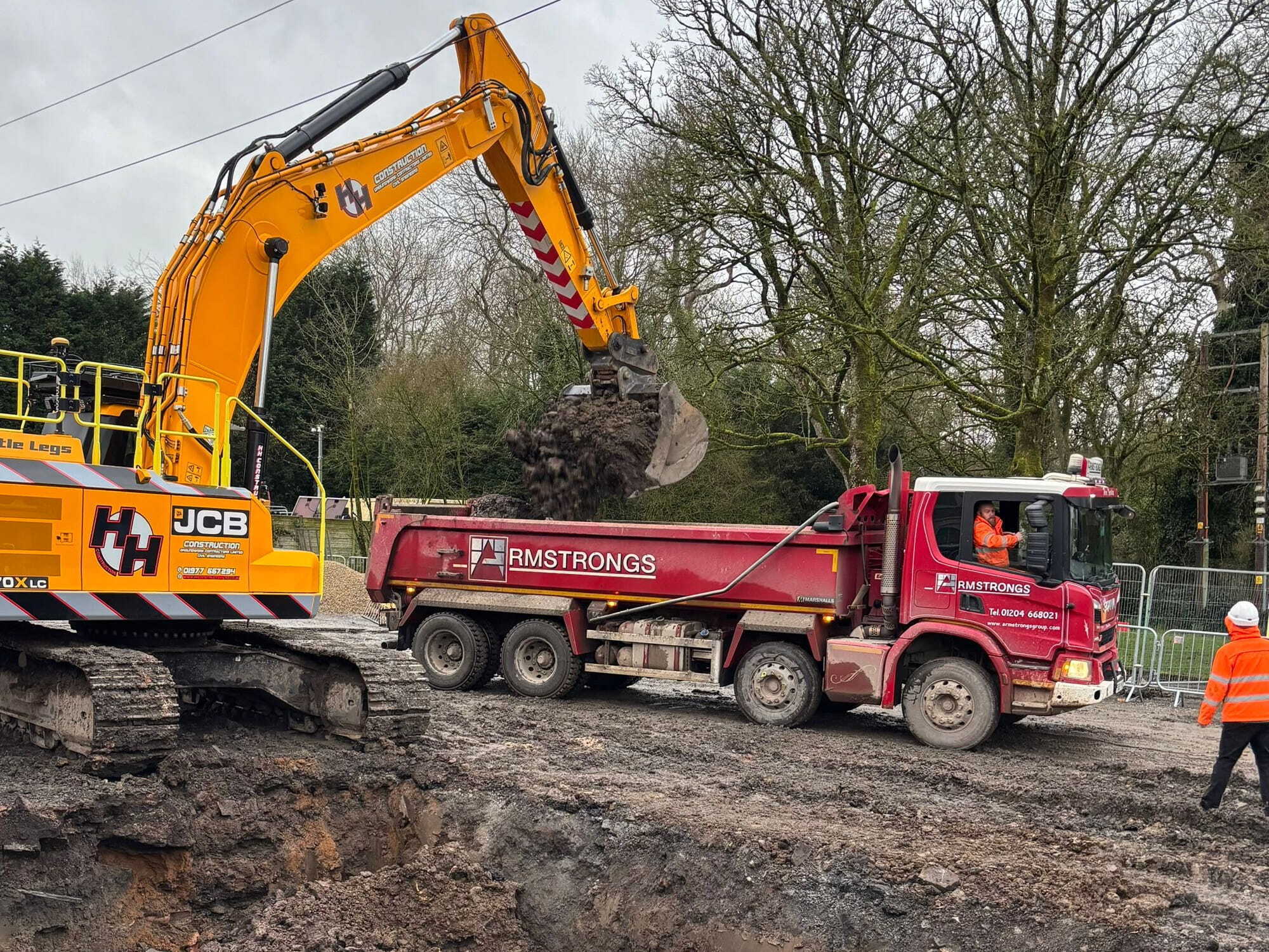
A recent example of Armstrongs Group’s muck away construction in action is the £7 million Aldi development in Orrell, Wigan.
The project involves the redevelopment of the former Abbey Lakes Hotel site into a new 16,000 sq ft supermarket, complete with over 100 parking spaces and electric vehicle charging bays. Once complete, the store is expected to create around 40 jobs and contribute to the regeneration of the area.
Before construction could begin, extensive site preparation was required.
Armstrongs was appointed to carry out site clearance muck away and ground preparation works as part of the enabling phase. This included removing surplus material and preparing the site for the main build programme.
The redevelopment of the vacant brownfield site demonstrates how effective groundworks waste disposal and early-stage material movement are critical to unlocking new development opportunities.
By ensuring the site was cleared safely and efficiently, construction could progress without unnecessary delay.
A reliable muck away partner helps to:
On larger schemes, poor logistics or insufficient fleet capacity can quickly disrupt schedules and increase costs.
Professional muck away services explained in practical terms means having the right vehicles, experienced operators and appropriate disposal routes in place from day one.
Armstrongs provides comprehensive muck away groundworks support across the North West, helping contractors manage excavation and site clearance efficiently.
Our modern Scania-powered fleet includes:
With over 70 wagons available, we support projects of all sizes, from smaller developments to major construction and infrastructure schemes.
In addition to haulage, we can also provide excavators and wheel loaders where required, creating a fully integrated solution for muck away on construction sites.
Whether you require clean muck disposal, bulk muck away soil removal or support with large-scale enabling works, our team can help keep your project moving.
To discuss your requirements, contact our team today.
Muck away in construction refers to the removal and disposal of waste materials generated during excavation and site preparation. This can include soil, clay, hardcore and other inert materials that cannot remain on site. Muck away ensures construction sites stay safe, compliant and ready for the next phase of work.
Muck away waste typically includes:
The exact materials involved depend on the project and whether the waste is classified as clean (inert), non-hazardous or hazardous.
Clean muck refers to inert, uncontaminated material such as natural soil, clay, sand or hardcore. It has not undergone chemical or biological change and does not pose a risk to human health or the environment.
Because it is inert, clean muck disposal is often more straightforward than hazardous waste, and in some cases the material may be suitable for reuse or recovery.
Excavation muck away is usually required during early-stage groundworks, including:
Any project generating surplus ground material will typically require a professional muck away solution.
Muck away services are designed for large volumes of excavation waste and are usually carried out using tipper wagons. This makes them suitable for bulk groundworks waste disposal and major construction projects.
Skip hire is generally more suitable for smaller volumes of mixed waste from domestic or light commercial works.
Made by Statuo

