
Clitheroe

Shap

Horwich, Bolton

Chorley

Horwich, Bolton
Clitheroe
Shap
Horwich, Bolton
Chorley
Horwich, Bolton
When specifying natural stone for construction, choosing the right material is essential. Two of the most commonly used options in the UK are granite and sandstone, both valued for strength, appearance and long-term performance.
But when comparing granite vs sandstone, how do they differ in terms of durability, compressive strength and structural suitability?
This guide explores granite vs sandstone construction, examining performance characteristics, durability and typical use cases to help determine which stone is best suited to different applications.
Understanding how each material forms helps explain its performance in construction.
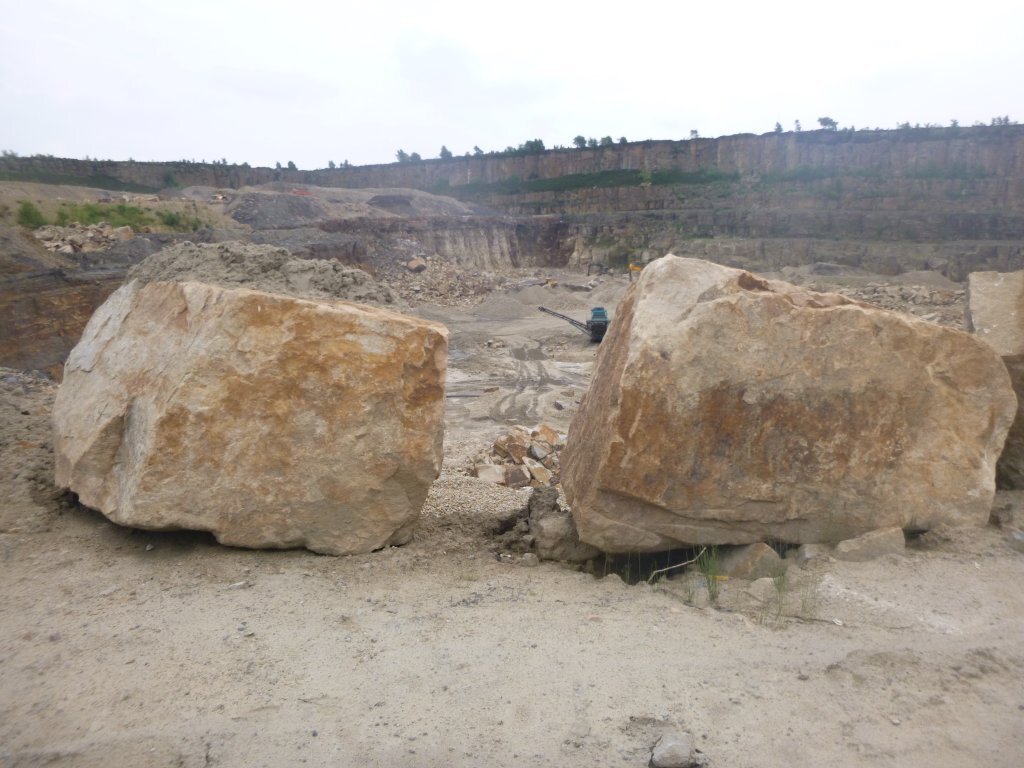
Granite is an igneous rock formed from slowly cooled magma deep beneath the Earth’s surface. This process creates a dense, interlocking crystalline structure that gives granite its exceptional strength.
Key characteristics include:
These properties make granite particularly suitable as stone for structural applications, including infrastructure and heavy-duty environments.
Shap Quarry in Cumbria is home to the distinctive Shap pink granite. The site produces:
Dark Shap granite can be seen in projects such as the historic Midland Hotel in Manchester, while Shap granite is also widely used for rock armour in coastal and river defence schemes.
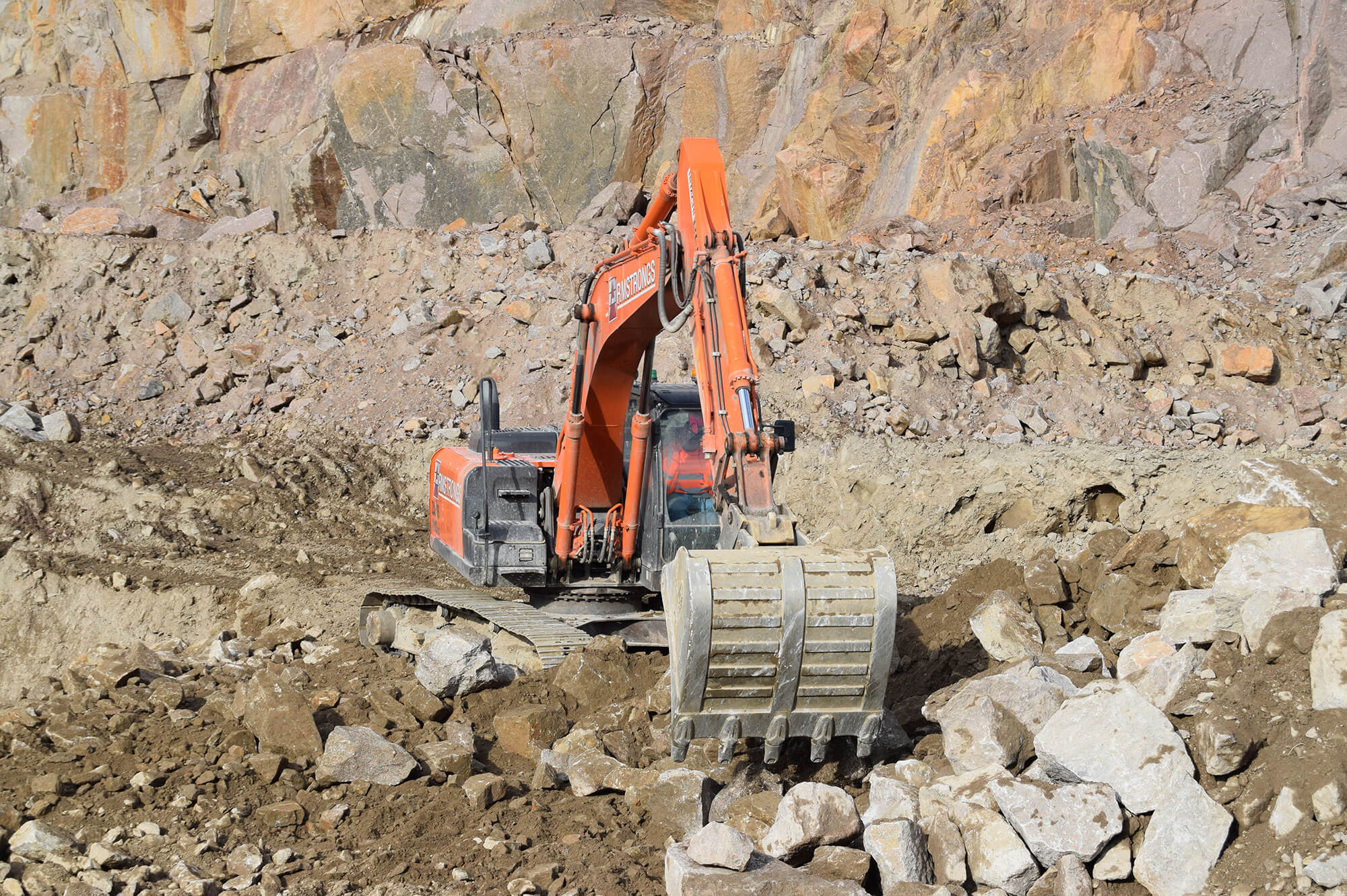
Sandstone is a sedimentary rock formed from compacted sand grains bonded together over time. Its properties vary depending on mineral composition and the degree of cementation.
Because of this variation, sandstone durability and overall sandstone performance can differ significantly between quarries.
High-quality sandstone and gritstone can offer:
Armstrongs operates several sandstone and gritstone quarries across the North West. Waddington Fell in Clitheroe produces variable-strength sandstones suitable for both aggregates and cut products.
Brinscall Quarry near Chorley supplies highly desirable sandstone used in prestigious projects such as the Sagrada Familia in Barcelona.
Montcliffe Quarry near Horwich produces durable gritstone (a well-cemented sandstone) for high-quality aggregates.
Pilkington Quarry near Horwich contains pale buff/brown durable gritstone. These examples highlight how sandstone can serve both structural and architectural purposes depending on grade and specification.
When comparing granite vs sandstone, performance characteristics are central to selecting the right material.
Granite compressive strength is typically very high, often ranging between 100–250 MPa depending on the specific type. This makes granite highly suitable for heavy load-bearing uses and demanding structural environments.
Sandstone compressive strength varies more widely. Well-cemented gritstones can perform strongly in structural settings, but softer sandstones may be more appropriate for non-load-bearing or architectural uses.
For stone for structural applications, engineering specification should always be based on tested material properties rather than general stone type alone.
Granite durability is one of its defining advantages. Its dense crystalline structure provides:
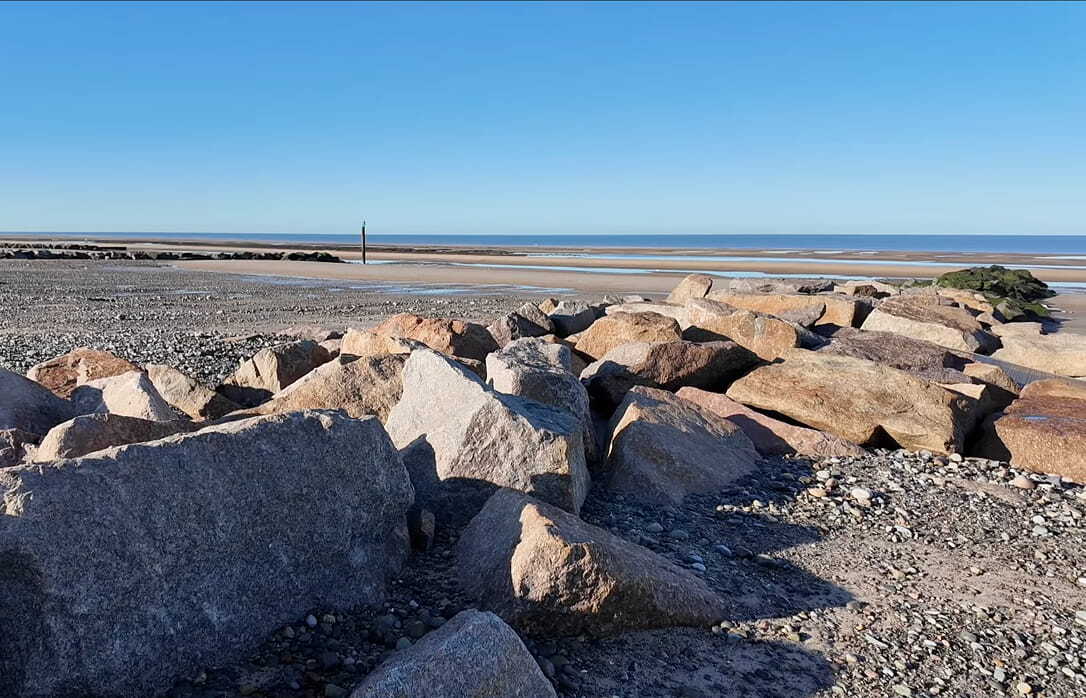
These properties make granite particularly suitable for exposed and high-impact environments, such as coastal defence. Shap granite, for example, has been used in major rock armour projects including the Rossall Coastal Defence Scheme and the Wyre Beach Management Scheme.
Sandstone durability, by contrast, depends heavily on composition. High-quality gritstone can provide excellent weather resistance, while softer varieties may be more vulnerable in aggressive environments.
In heritage and architectural settings, sandstone has demonstrated long-term performance in buildings that have stood for centuries.
Granite’s hardness contributes to its strength but also makes it more challenging to cut and shape. As a result, it is often selected for its visual impact as well as performance.
Dark Shap granite, for example, is used architecturally where both durability and distinctive appearance are required.
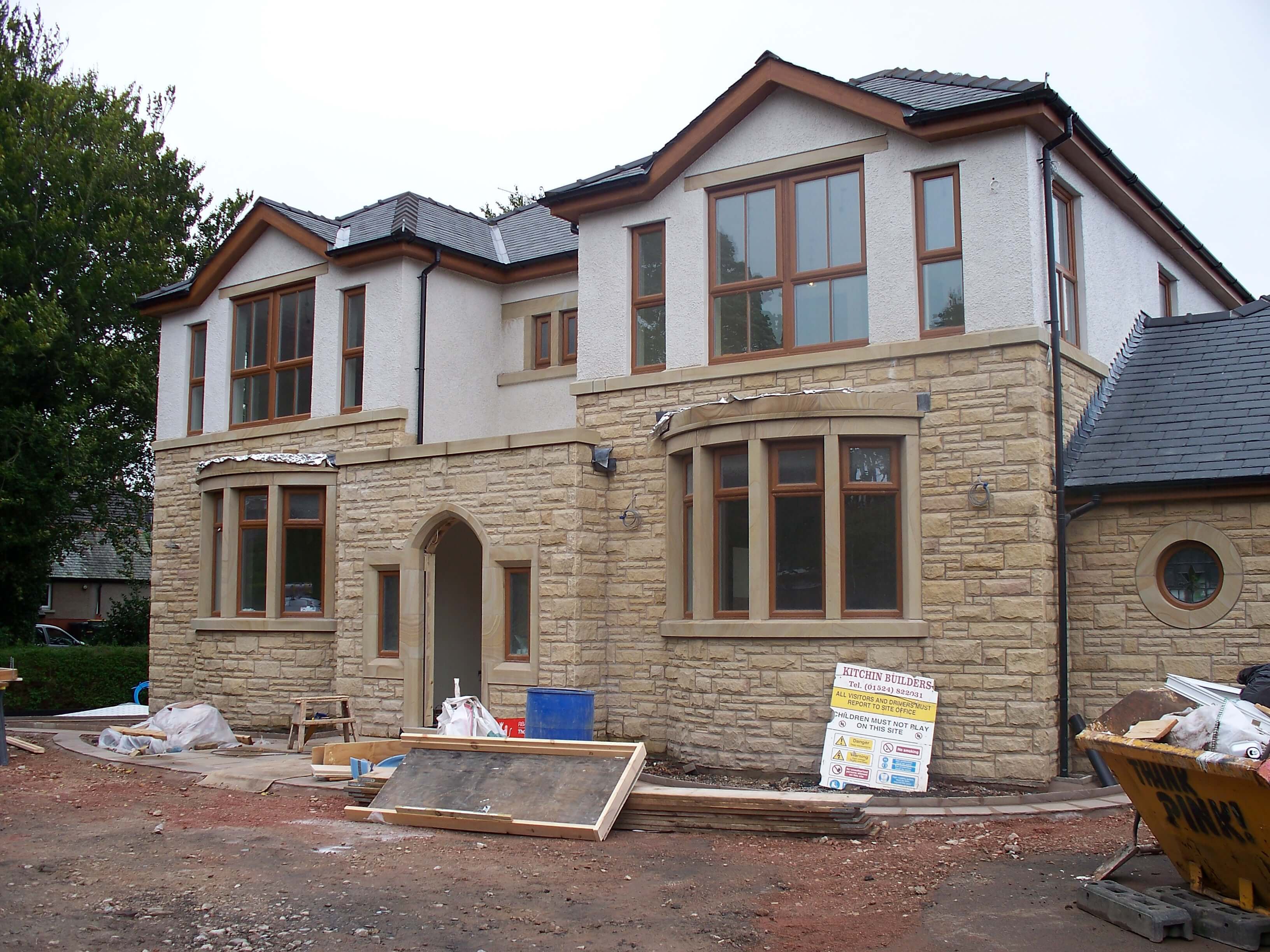
Sandstone is generally easier to work and carve, making it well suited to:
Stone from Waddington Fell, for instance, is used to produce bespoke cut products including fireplaces, lintels and even complete houses.
The choice between granite and sandstone in granite vs sandstone construction projects depends largely on performance demands.
Granite is frequently used as a high-strength aggregate for:
Its high granite compressive strength and abrasion resistance make it well suited to demanding applications.
Sandstone and gritstone aggregates, such as those produced at Montcliffe and Waddington Fell, are widely used in regional construction projects. Depending on grade, they can provide strong and reliable performance in sub-base and general aggregate applications.
In architectural settings, both materials are valued for different reasons.
Granite offers durability and prestige, as seen in landmark buildings such as the Midland Hotel in Manchester.
Sandstone, meanwhile, has long been associated with traditional British architecture. Its workability and aesthetic versatility make it ideal for:
Landmark developments such as the ongoing work at the Sagrada Familia
In aggressive marine environments, material durability is critical.
Granite’s high density and resistance to abrasion make it particularly suitable for coastal and river defence rock armour. Shap granite has been used to strengthen sea defences in major UK schemes.
Sandstone may be suitable in less aggressive environments, depending on its tested performance characteristics.
Selecting the right natural stone for construction requires careful consideration of:
Importantly, not all granite or sandstone performs the same. Quarry source, mineral composition and processing methods all influence final performance.
Specification should always be based on technical data and suitability for the intended application.
Armstrongs operates a diverse portfolio of quarries supplying both granite and sandstone products for a wide range of applications.This range allows Armstrongs to supply appropriate stone for structural applications, infrastructure schemes and architectural projects across the North West and beyond.
From high-strength granite for infrastructure to versatile sandstone for masonry and heritage restoration, both materials play a vital role in modern construction.
Armstrongs supplies a wide range of natural stone for construction, including granite and sandstone products suitable for aggregates, dimension stone, rock armour and architectural applications.
With quarries across the North West and decades of operational experience, our team can support projects of all sizes, from civil engineering schemes to specialist restoration work.
To discuss your specification requirements or project needs, contact Armstrongs today.
| Feature | Granite | Sandstone |
|---|---|---|
| Compressive Strength | High | Variable |
| Durability | Very high | Quarry dependent |
| Workability | Harder to shape | Easier to carve |
| Best For | Infrastructure, coastal defence | Masonry, heritage, building stone |
When comparing granite vs sandstone construction, the main differences lie in strength, durability and formation.
Granite is an igneous rock with a dense crystalline structure, giving it very high compressive strength and excellent durability. Sandstone is a sedimentary rock formed from compacted sand grains, and its strength and performance vary depending on composition and cementation.
Granite is typically chosen for heavy-duty structural applications, while sandstone is often selected for masonry and architectural use.
In most cases, yes. Granite compressive strength is generally higher than sandstone, often ranging between 100–250 MPa depending on the specific material.
However, sandstone performance can vary significantly. High-quality gritstone can offer strong structural capability, but softer sandstones may not match granite’s load-bearing capacity.
Material testing and quarry source are key when selecting stone for structural applications.
Granite durability is typically superior due to its dense, interlocking crystal structure. It offers high resistance to weathering, abrasion and freeze–thaw cycles, making it suitable for coastal and high-impact environments.
Sandstone durability depends on the type and quarry source. Well-cemented sandstone and gritstone can perform very well, particularly in traditional building and restoration projects.
Yes, certain types of sandstone are suitable as stone for structural applications, particularly well-cemented gritstone with strong compressive properties.
However, sandstone performance varies more widely than granite. Engineers should always specify material based on tested performance data rather than stone type alone.
Granite is commonly used for:
Its high granite compressive strength and long-term durability make it ideal for demanding environments.
Sandstone is frequently used for:
Its workability and natural variation make it a popular choice as natural stone for construction, particularly in architectural settings.
Made by Statuo

