Clitheroe

Shap

Horwich, Bolton

Chorley

Horwich, Bolton
Clitheroe
Shap
Horwich, Bolton
Chorley
Horwich, Bolton
When aggregates arrive on a construction site, knowing what has been delivered is only part of the picture. Contractors and project teams may also need to confirm where the material came from, whether it matches the order and which production or testing records support it.
Aggregate traceability creates this connection. By maintaining clear information from the source through to delivery, suppliers can provide greater transparency while helping customers manage specifications, project records and any questions that arise after the material has left the quarry.
Aggregate traceability is the ability to follow a material through the supply chain and connect it with relevant information about its source, production and delivery. Depending on the product and application, this information may include:
Construction material traceability does not mean tracking every individual stone. Instead, it means maintaining a reliable link between the supplied product and the records used to identify it.
Traceability should not be confused with quality or compliance. A material being traceable does not automatically make it suitable for a particular application. However, it allows the supplier and customer to retrieve the information needed to check its source, specification and supporting documentation.
Aggregate supply traceability is not created by one document at the point of delivery. It relies on connected controls and records throughout extraction, processing, storage and dispatch.
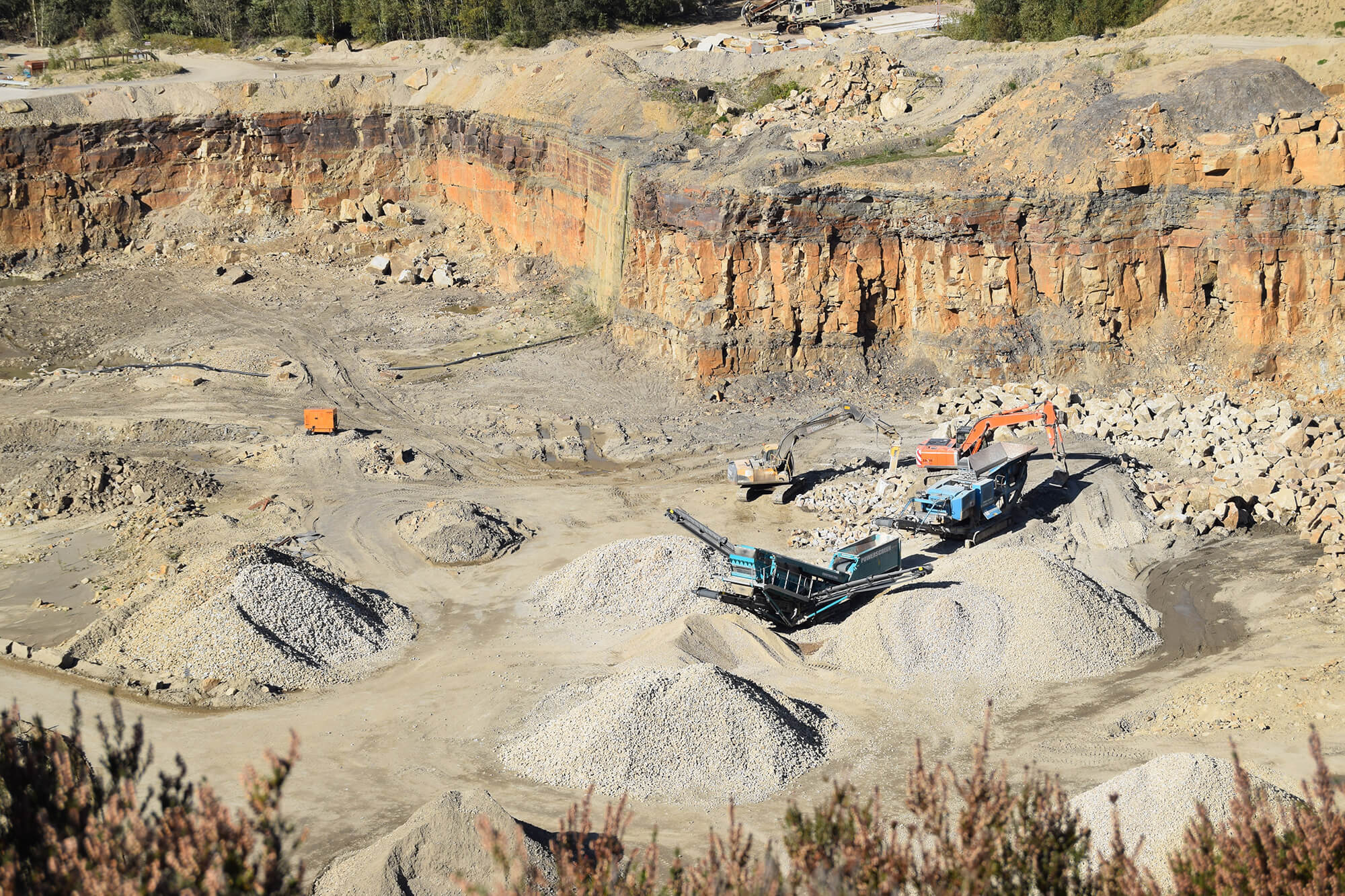
The process begins by identifying where the material originated. For primary aggregates, this will usually be the quarry or extraction site. For recycled materials, the production site and controls applied to incoming material may also be relevant.
Aggregate source verification provides the starting point for the traceability record. It helps distinguish materials supplied from different locations and supports more responsible aggregate sourcing.
Once extracted, rock may pass through several stages of crushing, screening and washing to create different products. Clear product names, grades and identification procedures help keep these materials distinct throughout production.
This is particularly important because aggregates with different specifications can look very similar. Maintaining their identity reduces the risk of one grade being mistaken for another.
Representative sampling and testing provide information about properties such as grading, fines content, moisture and resistance to wear. Where required, results can be connected with the relevant product and production period.
This allows supporting information to be retrieved without suggesting that every individual lorry load undergoes separate laboratory testing. Our guide to aggregate testing methods used in UK construction explains how common properties are assessed.
Finished aggregates are normally held in separate, clearly identified stockpiles. Effective stockpile management helps prevent products from mixing while reducing contamination and segregation during storage and handling.
Maintaining this separation protects both product quality and traceability before dispatch. Find out more about how aggregate stockpiles are managed on quarry sites.
Before loading, the selected aggregate should be checked against the customer’s order. Delivery records can then connect the material with details such as its product description, quantity, dispatch date and destination.
These records form the final link between the production site and the project, allowing information about a delivery to be retrieved if it is needed later.

No single document provides the complete traceability record. Instead, aggregate material traceability is supported by several pieces of information that connect the product, its source and its delivery.
Depending on the material and project requirements, these may include:
Each record has a different purpose. A delivery ticket confirms what was dispatched, while test results provide information about the properties of a representative sample. Production records can show how the material was identified and controlled before it left the site.
The precise documentation required will depend on the aggregate, its intended application and the customer’s specification. These requirements should therefore be established before supply begins.
Traceability helps connect a delivery with the product specification and supporting information. This gives contractors greater confidence that the material supplied corresponds with what was ordered, particularly when several similar-looking grades are being used on the same project.
However, traceability does not replace technical assessment. The material must still meet the relevant performance and specification requirements for its intended application.
If testing or a site inspection raises a concern, traceable records provide a clear starting point for investigation. The supplier can review the material’s source, production information and associated deliveries to understand the potential extent of the issue.
This allows remaining material to be identified and managed appropriately while avoiding unnecessary action against unrelated products or deliveries.
Supplying or placing the wrong aggregate can lead to rejected work, replacement costs and delays. Clear product identification throughout production, loading and delivery reduces the risk of materials being confused.
Where a question does arise, accessible records also make it faster to check what was ordered, dispatched and received.
Construction and infrastructure projects often require material information to be retained for quality plans, client reporting and project handover. Good aggregate supply traceability makes it easier to provide this evidence and respond to questions later in the project.
It also improves aggregate supply chain transparency by showing how the material moved from its production source to its final destination.
The phrase aggregate certification is sometimes used broadly, but certification, compliance and traceability are not interchangeable.
Traceability connects an aggregate with its source, production information and delivery records. It shows where the material came from and allows relevant information to be retrieved.
Aggregate compliance means that the product meets the applicable technical, contractual or regulatory requirements for its intended use. This may be supported by sampling, testing and production-control records.
Depending on the product, formal documentation may include a Declaration of Performance, conformity marking or third-party certification. Test reports may provide further supporting information, but they are not automatically the same as certification.
The applicable requirements depend on the relevant product standard and market. Current government guidance on construction products in Great Britain should therefore be checked when confirming which declarations and conformity information apply.
These elements work together. Compliance shows that requirements have been met, while traceability helps demonstrate that the supporting information relates to the material supplied.
Verified source information helps customers understand where an aggregate was extracted or processed. This can support responsible procurement policies, project reporting and requirements relating to material origin.
However, traceability does not automatically make a product sustainable. It provides evidence about the material’s source, while its wider environmental impact will also depend on factors such as production, transport, resource use and site management.

Before placing an order, customers may wish to ask:
A reliable supplier should be able to explain which information is provided routinely, what may be available upon request and how the material remains identifiable through to delivery.
Traceability connects a physical delivery with reliable information about its source, specification and movement through the supply chain. It supports aggregate compliance, strengthens accountability and makes it easier to investigate questions when they arise.
Effective records give contractors and project teams greater confidence that the material received corresponds with the product ordered. This is particularly valuable on large construction and infrastructure projects involving multiple materials, deliveries and suppliers.
Explore the Armstrongs range of aggregates or contact our team to discuss your project requirements and the supporting product information available.
Aggregate traceability is the ability to connect a supplied material with information about its production source, product identity and delivery.
The details vary, but may include the product description, quantity, dispatch date, supplier, customer and delivery destination.
No. Certification or conformity documentation provides evidence relating to particular standards or declared performance, while traceability connects that evidence with the material supplied.
The source may be confirmed through quarry or production-site records, product identification and the associated delivery documentation.
Infrastructure projects often involve large quantities and strict specifications. Traceability supports project records and helps confirm that each delivery corresponds with the required material.
Yes. Recycled aggregate traceability can connect the finished product with its processing site, production controls and relevant delivery information.
There is no single retention period for every record. The appropriate period depends on the product, applicable standards, production-control system, contract and regulatory requirements.
Made by Statuo