Clitheroe

Shap

Horwich, Bolton

Chorley

Horwich, Bolton
Clitheroe
Shap
Horwich, Bolton
Chorley
Horwich, Bolton
As urban development increases, more construction projects require surface water management.
Sustainable Drainage Systems (SuDS) are designed to control runoff at source, reducing flood risk and easing pressure on traditional sewer networks. Permeable aggregates play a vital role in these systems. By allowing water to pass through and be stored within their structure, they support infiltration, attenuation and controlled discharge.
Understanding how permeable aggregate drainage works, and how aggregate permeability affects performance, is essential when specifying materials for SuDS design.
Permeable aggregates are open‑graded materials specifically designed to allow water to pass through them.
Unlike regular sub‑base materials that contain a high proportion of fines, permeable aggregates have minimal fine particles, creating interconnected void spaces between the stones.
These voids allow water to infiltrate rapidly and be temporarily stored within the layer.
In permeable materials construction, aggregate permeability is a critical performance characteristic.
The cleanliness, size and grading of the stone determine how effectively water can move through the structure. Materials that are too tightly graded or contaminated with fines restrict flow and reduce the efficiency of the drainage.
Permeable aggregates are therefore selected not only for strength, but also for their hydraulic performance. They must provide sufficient structural stability to support loads while maintaining the void ratio necessary for sustainable drainage applications.
In a typical SuDS arrangement, rainfall flows through a permeable surface, such as permeable paving, and into an underlying open‑graded aggregate layer.
Because permeable aggregates contain a high proportion of interconnected voids, water can move freely through the structure. These void spaces also provide temporary storage capacity, allowing the system to attenuate peak flows during heavy rainfall.
Stored water then either infiltrates into the underlying ground or is discharged gradually through a controlled outlet.
A range of drainage aggregate types are used within Sustainable Drainage Systems, depending on the application and hydraulic requirements.
The key characteristic across all SuDS aggregates is their open grading and low fines content, which allows water to flow freely through the structure.
In permeable paving systems, clean single‑sized aggregates such as 4/20mm or 20/40mm stone are commonly used within bedding and sub‑base layers. These materials provide both structural support and temporary water storage through their high void ratio.
For soakaways and attenuation systems, larger open‑graded stone, such as 40/75mm, may be specified to maximise storage capacity. The increased void space enables greater water retention during heavy rainfall events.
Type 3 sub‑base is another commonly specified material in permeable materials construction. Unlike traditional Type 1, it contains minimal fines, making it suitable for permeable aggregate drainage layers where both strength and infiltration are required.
Selecting the correct aggregates for drainage systems depends on anticipated loading, required storage volume and overall SuDS design objectives. Each layer must balance hydraulic performance with structural stability to ensure long‑term effectiveness.
See our full guide to the best sized aggregates for drainage.
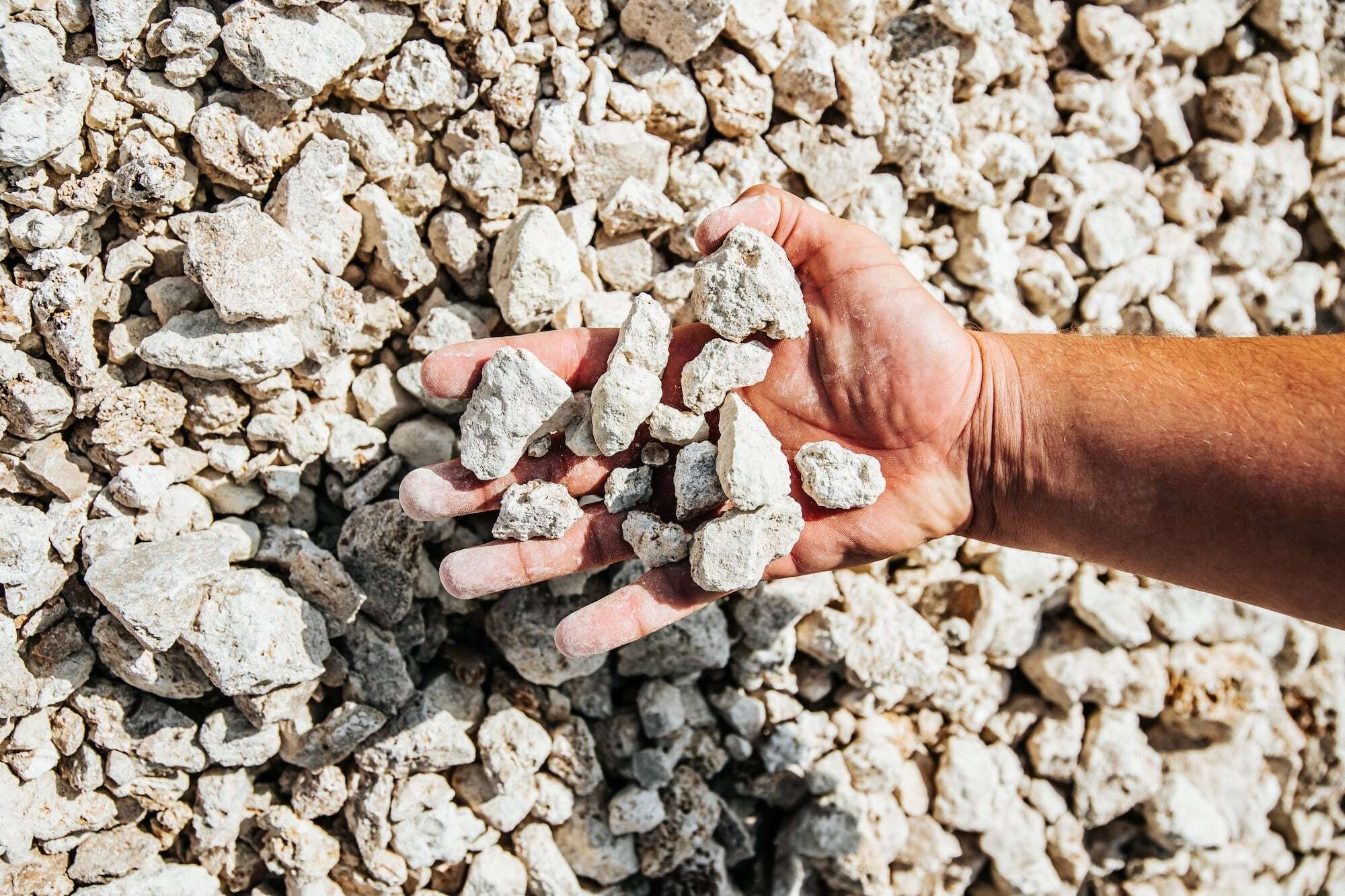
In SuDS design, permeable aggregates are not simply drainage materials, they are engineered components within a wider water management strategy.
Their role must be considered alongside site infiltration rates, groundwater conditions, loading requirements and discharge controls.
Sustainable drainage aggregates are typically specified to provide three core functions: structural support, temporary water storage and controlled water movement. The depth of the aggregate layer, its void ratio and its permeability all influence the system’s attenuation capacity.
In infiltration‑based systems, the aggregate must allow water to pass efficiently into the underlying soil. In lined or tanked systems, it may act primarily as a storage medium before controlled discharge.
Designers must also account for long‑term performance. SuDS aggregates should be selected to resist degradation under load while maintaining permeability over time. This often requires careful grading selection and the use of separation geotextiles to prevent clogging from surrounding soils.
By integrating the correct SuDS design aggregates into the build‑up, engineers can create drainage systems that manage runoff effectively while meeting structural and planning requirements.
Permeable aggregates must provide structural support as well as drainage.
Selecting the right SuDS aggregates and installing them correctly ensures the system performs hydraulically while meeting structural requirements.
At Armstrongs, we supply a wide range of permeable aggregates and drainage aggregate types suitable for SuDS applications, including permeable paving sub‑bases, soakaways and attenuation systems.
Our sustainable drainage aggregates are produced under strict quality control, ensuring consistent aggregate permeability and structural reliability.
With delivery available across the North West and further afield, we support contractors, developers and engineers with dependable supply and technical guidance for drainage and infrastructure projects. Get in touch with our team today for more information.
Made by Statuo