Clitheroe

Shap

Horwich, Bolton

Chorley

Horwich, Bolton
Clitheroe
Shap
Horwich, Bolton
Chorley
Horwich, Bolton
If you’re building a driveway, access road, car park or hardstanding area, there’s a good chance MOT Type 1 will be specified as the sub‑base. It’s one of the most widely used aggregates in UK construction, valued for its strength, reliability and ability to compact into a stable foundation.
But what exactly is MOT Type 1, when should you use it, and how much do you need to order?
In this guide, we break down what it is, where it’s used, how it performs, and how to calculate the right quantity for your project.
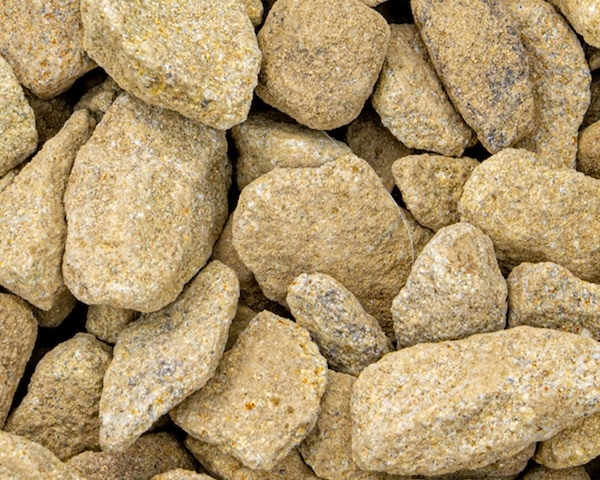
MOT Type 1 is a crushed granular aggregate used as a structural sub‑base layer in construction. It’s typically produced from limestone, granite or gritstone and graded from 0–40mm, meaning it contains everything from larger stone down to fine particles.
Those fine particles, often referred to as “fines”, are what make MOT Type 1 so effective. When compacted, the smaller particles fill the gaps between the larger stones, allowing the material to bind together tightly. This creates a dense, stable layer capable of supporting significant weight without shifting.
To be classified as MOT Type 1, the material must meet the grading and quality requirements set out in Clause 803 of the Specification for Highway Works (SHW). This ensures consistency in particle size, strength and performance, giving contractors confidence that the sub‑base will behave as expected on site.
Because of its strength and reliability, MOT Type 1 is widely used as the foundation layer beneath tarmac, concrete, block paving and other finished surfaces.
The sub‑base is responsible for spreading loads evenly across the ground beneath a surface. If it fails, the surface above it can crack, sink or rut over time. That’s why MOT Type 1 is so widely specified, it provides the strength and stability needed to support long‑term use.
Because it’s well‑graded from 0–40mm and includes fines, MOT Type 1 compacts into a dense, interlocking layer. When properly installed and compacted in layers, it forms a firm platform that resists movement and distributes weight effectively. This makes it suitable for both light domestic use and heavier commercial traffic.
Key performance benefits include:
It’s also a recognised highways material, meaning it meets established construction standards when produced to specification. For contractors and groundworkers, that consistency is critical, especially on regulated or inspected projects.
In short, MOT Type 1 works because it creates a solid foundation. And in groundworks, the foundation is what determines how well everything above it performs.
Because of its strength and compaction properties, MOT Type 1 is used across a wide range of construction and groundworks projects.
One of its most common applications is beneath driveways, where it provides the structural base for block paving, tarmac, resin or gravel finishes. Without a properly compacted sub‑base, driveways are far more likely to suffer from sinking or uneven settlement over time.
It’s also widely used in:
In larger schemes, MOT Type 1 forms part of the overall pavement build‑up, sitting between the prepared sub‑grade (the natural ground) and the surface course. In domestic projects, it serves the same structural function, just on a smaller scale.
Whether the finished surface is flexible (like tarmac) or rigid (like concrete), the sub‑base plays a critical role in distributing loads and preventing movement. That’s why MOT Type 1 remains the default choice for so many groundwork applications across the UK.
The correct depth of MOT Type 1 depends on how the surface will be used and the ground conditions beneath it. A lightly used garden path will require far less depth than a driveway supporting vehicles.
As a general guide:
It’s important to note that these are compacted depths. Because the material reduces slightly during compaction, it’s usually laid a little thicker before being consolidated.
For best results, MOT Type 1 should be:
Trying to compact too much material in a single layer can lead to poor consolidation, which may cause settlement later on.
If the ground beneath is soft or unstable, installing a geotextile membrane between the soil and the sub‑base can help prevent contamination and improve stability.
Getting the depth and compaction right at this stage is crucial, the finished surface will only ever be as strong as the base beneath it.
Ordering the correct quantity of MOT Type 1 is essential. Too little can delay your project, while too much can leave you with unnecessary cost and excess material on site.
The amount you need depends on three things:
Measure the length and width of the area in metres.
Length × Width = Area (m²)
For example:
10m driveway × 5m wide = 50m²
Convert your required depth into metres (e.g. 150mm = 0.15m).
Area × Depth = Volume (m³)
Using the example above:
50m² × 0.15m = 7.5m³
MOT Type 1 typically weighs around 2.0–2.2 tonnes per cubic metre, depending on moisture content and compaction. A commonly used estimate is 2.1 tonnes per m³.
7.5m³ × 2.1 = 15.75 tonnes
So you would need approximately 16 tonnes of MOT Type 1.
It’s sensible to allow a small margin (around 5–10%) to account for:
In the example above, rounding up to 17 tonnes would provide a safe buffer.
If you’re unsure, most aggregate suppliers can help confirm quantities based on your dimensions and intended depth before delivery.
Even high‑quality MOT Type 1 won’t perform properly if it’s installed incorrectly. Taking care at the groundwork stage will help prevent movement, rutting or settlement later on.
For best results:
Proper compaction is key. The material should feel firm underfoot and show no visible movement before you move on to surfacing.
A well‑built sub‑base can last for decades, but shortcuts at this stage often lead to problems.
Some common mistakes include:
Insufficient depth reduces load‑bearing capacity and increases the risk of settlement.
Trying to compact 150mm+ in one go can leave the lower section loose and unstable.
Without proper edging, the sub‑base can spread over time, especially on driveways.
Running short mid‑project can cause delays and inconsistent compaction if different loads are used.
On highways or inspected jobs, the sub‑base must meet the required specification.
Avoiding these issues ensures the finished surface performs as intended and reduces the likelihood of costly remedial work later on.
Because MOT Type 1 contains fine particles, it compacts into a dense layer. This makes it excellent for strength and stability, but it also means it is not fully permeable.
Water does not pass through MOT Type 1 in the same way it would through a free‑draining aggregate. On standard driveways and roads, this isn’t usually an issue, as surface water is managed through falls, channels or drainage systems.
However, if your project requires a permeable build‑up, such as under SuDS‑compliant or permeable paving systems, a different sub‑base specification may be required.
If drainage is a concern, it’s always worth confirming the correct build‑up before ordering materials.
At Armstrongs, we produce and supply certified MOT Type 1 from our own quarries, ensuring consistent grading and reliable on‑site performance. Our material is produced in line with Clause 803 and BS EN 13285, giving contractors confidence that it meets highways and construction specifications.
We supply bulk loads across the North West and beyond, delivering directly to site with full traceability and support from our in‑house team.
If you’re unsure how much MOT Type 1 you need, we can help calculate quantities and arrange delivery to suit your schedule.
MOT Type 1 typically weighs between 2.0 and 2.2 tonnes per cubic metre. A common working estimate is 2.1 tonnes per m³, though this can vary slightly depending on moisture content and compaction.
It can be used as a temporary running surface or on low‑traffic areas, but it’s generally designed to act as a sub‑base beneath a finished surface such as tarmac, concrete, or block paving.
If the ground is soft, clay‑based, or prone to movement, a geotextile membrane is recommended to prevent contamination and improve long‑term stability.
If compacted properly in layers, surfacing can usually be installed shortly after. There’s no need for extended settling time provided the sub‑base is firm and stable.
Recycled Type 1 can be suitable for certain projects if it meets the required specification. For highways or regulated work, certification and compliance with the relevant clause are essential.
Made by Statuo