Clitheroe

Shap

Horwich, Bolton

Chorley

Horwich, Bolton
Clitheroe
Shap
Horwich, Bolton
Chorley
Horwich, Bolton
Quarries handle large quantities of stone every day. Breaking, moving and processing that material can release dust at several stages, from drilling and crushing to loading vehicles and travelling along haul roads.
Good dust control starts by limiting particles as close as possible to where they’re created. Depending on the activity, this might involve enclosing equipment, extracting dust, applying water or changing how material is handled.
There isn’t one method that works for every quarry. The right controls depend on the rock, process, weather, site layout and surrounding area. This guide looks at how dust is managed at its source, across roads and stockpiles and through worker protection, monitoring and site dust-management plans.
It focuses on mineral dust produced by quarrying and aggregate processing. Exhaust gases and other emissions from vehicles or machinery require separate controls.
Dust is most likely to be released when dry material is broken, dropped or disturbed. Drilling and extraction disturb rock at the quarry face, while crushing and screening create smaller particles and separate the material by size.
Dust can also escape as aggregate moves along conveyors, falls between transfer points or is tipped into hoppers, vehicles and stockpiles.
Not all quarry dust comes directly from processing.
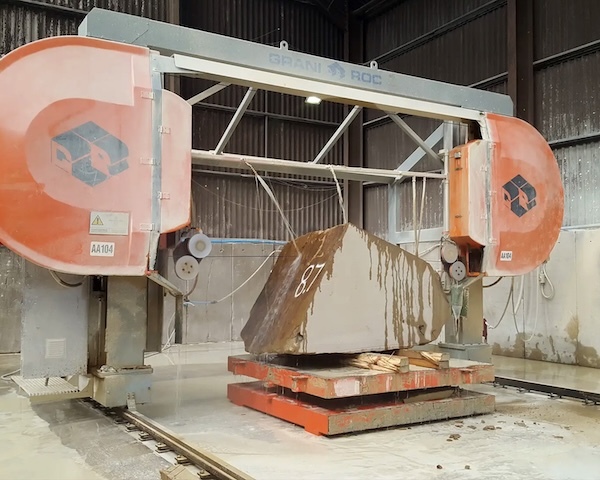
Vehicle tyres can lift loose material from haul roads, while mud or spillages may become another source once they dry. Sawing and finishing dimensional stone can also produce dust if it isn’t controlled close to the tool.
Government guidance identifies extraction, loading, on-site movement and initial processing as common sources of particulate emissions. More detail is available in its mining and quarrying pollution-reporting guidance.
No. “Quarry dust” is a broad term covering particles of different sizes and compositions.
Larger particles are more likely to settle relatively close to where they were created. Finer particulate matter, including PM10, can remain airborne for longer and may travel further.
Workplace assessments may also distinguish between inhalable and respirable dust.
Inhalable dust can enter the nose and mouth, while the smaller respirable fraction can reach deeper into the lungs. Where the rock contains crystalline silica, this fraction may include respirable crystalline silica.
The amount of silica present depends on the geology and the work being carried out. Quarry dust from different rock sources shouldn’t therefore be assumed to have the same composition or level of risk.
Visible dust can help identify a problem, but it doesn’t provide a complete assessment. Some fine particles may be difficult to see, while a brief visible release doesn’t automatically mean that a workplace exposure limit or boundary standard has been exceeded. Appropriate monitoring may still be needed to understand what is present and whether the controls are working.
Quarry dust needs to be controlled for two related but different reasons: protecting the people working on site and managing its effects beyond the immediate working area.
Repeated exposure to some fine mineral dusts can affect the lungs. The level of risk depends on what the dust contains, how much becomes airborne and how often somebody is exposed.
Particular care is needed when working with rock containing crystalline silica. Breaking or processing this material can produce respirable crystalline silica, made up of particles small enough to reach deep into the lungs.
Workplace exposure must be assessed and controlled under the Control of Substances Hazardous to Health Regulations, commonly known as COSHH. The HSE provides specific quarry silica guidance covering drilling, haulage, crushing, screening and other common activities.
The aim isn’t simply to remain below a numerical exposure limit. Because respirable crystalline silica is a carcinogen, exposure must be reduced as far as reasonably practicable.
Dust can also settle beyond the immediate working area, potentially affecting nearby homes, roads, businesses, habitats and other sensitive locations.
How far it travels depends on the particle size, wind, rainfall and moisture conditions. The surrounding landscape, distance from the source, activity taking place and controls being used can all make a difference too.
A visible dust release shouldn’t automatically be treated as proof that an air-quality standard has been exceeded. Equally, the absence of an obvious dust cloud doesn’t confirm that workplace exposure is adequately controlled. Conditions on site and at the boundary may therefore need to be assessed in different ways.
Effective quarry dust control usually begins at the source. Preventing particles from becoming airborne is generally more reliable than trying to protect people after dust has already been released.
Modern quarries use a combination of site design, engineering controls, water suppression, maintenance and working procedures. Respiratory protective equipment may still be required for certain tasks, but it shouldn’t be relied on as the main control.
Dust management starts with how the quarry is laid out and worked.
Where possible, plant, haul roads and stockpiles can be positioned with nearby homes, workplaces and other sensitive locations in mind. Prevailing winds, surrounding land and the position of occupied areas within the quarry may also influence where particular activities take place.
Quarry faces, screening mounds and other site features can sometimes help limit the movement of dust. Planning shorter vehicle routes and reducing the distance material must be handled can remove further opportunities for it to become airborne.
Good site design can’t prevent every release, but it can make individual sources easier to control.
Drilling directly into dry rock can release fine dust close to the operator. Depending on the equipment and material, this may be controlled using water delivered to the drill or a suitable extraction system.
These systems need regular inspection and maintenance. Blocked water feeds, worn components or damaged extraction equipment can reduce their effectiveness even when the drill continues to operate normally.
The extraction method should also suit the geology and the product being produced. Weather conditions may affect when certain work takes place, while people who aren’t needed for the task should be kept away from the immediate area.
Not every quarry drills, blasts or extracts material in the same way, so the controls must reflect the actual activity.
Crushing and screening can create dust at several points as stone is reduced and separated into different sizes.
Enclosing equipment or individual release points can help contain it. Extraction systems or water sprays may then be used to remove or suppress dust within the enclosure.
Conveyors and transfer points also need attention. Covers, well-maintained chutes and shorter drop heights can reduce the amount of material disturbed as it moves through the plant. Seals, guards and extraction equipment must be kept in good condition for these measures to remain effective.
Water sprays and misting systems help keep fine material damp or capture particles close to where they’re released. They may be fitted around crushers, screens and conveyor transfer points, while bowsers or fixed sprays can be used on quarry roads.
The position of the spray, droplet size and amount of water all matter. A poorly placed system may use plenty of water without controlling the source effectively.
More water isn’t always better either. Too little may leave dust uncontrolled, but excessive water can create mud, produce dirty runoff or affect the moisture condition of the aggregate. It may also interfere with products or processes that need tighter moisture control.
Our guide explains more about how aggregate moisture content affects material performance.
During dry weather, quarry roads can become a significant source of airborne dust. Vehicle tyres disturb loose fines, while the movement of the vehicle itself creates air turbulence.
Roads should therefore be kept firm and well maintained, with spillages and loose material removed. Water or an approved dust suppressant may be applied when conditions require it, while suitable speed limits help reduce the amount lifted into the air.
Wheel-washing facilities can prevent mud and fines being carried onto public roads. Vehicle routes can also be planned to avoid unnecessary journeys around the site.
Without regular cleaning and maintenance, the same settled material may be lifted repeatedly each time another vehicle passes.
Stockpile location and orientation can influence how exposed a material is to wind. Pile height, surface condition and moisture may also need to be managed according to the product and site conditions.
During loading, keeping the drop height as low as practicable reduces the distance material falls and the amount of dust disturbed. Avoiding unnecessary rehandling and cleaning spillages promptly can reduce it further.
Our guide to how aggregate stockpiles are managed on quarry sites covers storage and handling in more detail.
Controls at the source should be supported by measures that protect people working near dusty activities.
Excavators, loading shovels and control rooms may use enclosed cabins with filtered air. Filters need to be checked and replaced as required, while doors and windows must remain closed in dusty areas if the system is to work properly.
Cleaning methods matter too. Dry sweeping or using compressed air can put settled dust back into the atmosphere, so suitable vacuum or wet-cleaning methods may be needed instead.
Where a risk assessment identifies the need for respiratory protective equipment, it must be suitable for the task and wearer. Users may also require face-fit testing and training. Simply handing somebody a disposable mask isn’t a substitute for controlling the source.
Health surveillance may form part of the wider arrangements where workers are exposed to respirable crystalline silica or other relevant dusts.
Dust controls need to respond to the conditions on the day. A method that works during cool, damp weather may be less effective after several dry and windy days.
Wind can lift loose material and carry fine particles further from their source. Quarry teams may therefore check forecasts and current wind conditions before work begins, then increase road or stockpile inspections as conditions change.
Watering schedules may need adjusting, while particularly dusty work could be moved, delayed or carried out differently. If the available controls can’t prevent an unacceptable release, the activity may need to be reduced or paused.
Rain can temporarily suppress dust on roads and stockpiles, but it doesn’t remove the need for management. Wet material carried onto a road can later dry out and become a fresh
Dust can be released when dry rock is drilled, extracted, crushed, screened, moved or dropped. Vehicle traffic can also lift loose fine material from quarry roads.
Controls may include enclosing equipment, extracting dust, using water sprays, reducing material drop heights and maintaining clean haul roads. The measures used depend on the rock, activity and site conditions.
Water keeps loose surface material damp, making it less likely to be lifted by vehicle tyres. It must be applied carefully to avoid creating excessive mud or dirty runoff.
Some fine particles can travel beyond the immediate working area, particularly during dry or windy weather. The distance depends on the particle size, source, landscape, weather and controls in place.
No. The amount of crystalline silica depends on the geology of the rock. Where silica is present, only the fine respirable fraction is classed as respirable crystalline silica.
Monitoring may include visual inspections, equipment checks, deposited-dust gauges or fixed particulate monitors. Workplace exposure may be assessed separately using personal air sampling.
Rain can temporarily reduce dust by keeping roads and stockpiles damp, but it isn’t a permanent solution. Mud and fine material may become a new dust source when they dry.
It sets out the site’s potential dust sources, nearby sensitive locations, required controls, monitoring arrangements and staff responsibilities. It should also explain how unusual releases and complaints will be investigated.
The source should be investigated and the activity adjusted or paused where necessary. Equipment may need repairing, roads cleaning or additional controls introducing before normal work continues.
Made by Statuo