Clitheroe

Shap

Horwich, Bolton

Chorley

Horwich, Bolton
Clitheroe
Shap
Horwich, Bolton
Chorley
Horwich, Bolton
Aggregate density and aggregate strength are fundamental to structural performance in construction. These properties have a strong influence on the load bearing capacity, stability and long‑term durability of sub‑base layers to concrete production.
The bulk density of aggregates affects compaction and settlement, while aggregate strength determines resistance to crushing and deformation under load.
Understanding how these characteristics interact, and how they’re measured through aggregate strength testing, is essential for selecting materials that meet specification and perform reliably in service.
Aggregate density refers to the mass of aggregate per unit volume and is typically expressed in kilograms per cubic metre (kg/m³) or tonnes per cubic metre (t/m³).
In construction, the term can refer to several related measurements, including particle density and the bulk density of aggregates.
Particle density describes the density of the solid material itself, excluding voids between particles. Bulk density, by contrast, measures the mass of aggregate within a given volume, including the air spaces between particles. This is often the more practical value on site, as it reflects how the material behaves when transported, placed and compacted.
The density of construction aggregates varies depending on the rock type and grading. Denser materials generally provide greater stability and resistance to movement under load, while lower density materials may be selected where reduced structural weight is required.
Understanding aggregate density is essential when calculating volumes, estimating material quantities, and assessing how a layer will perform once compacted within a structural build‑up.
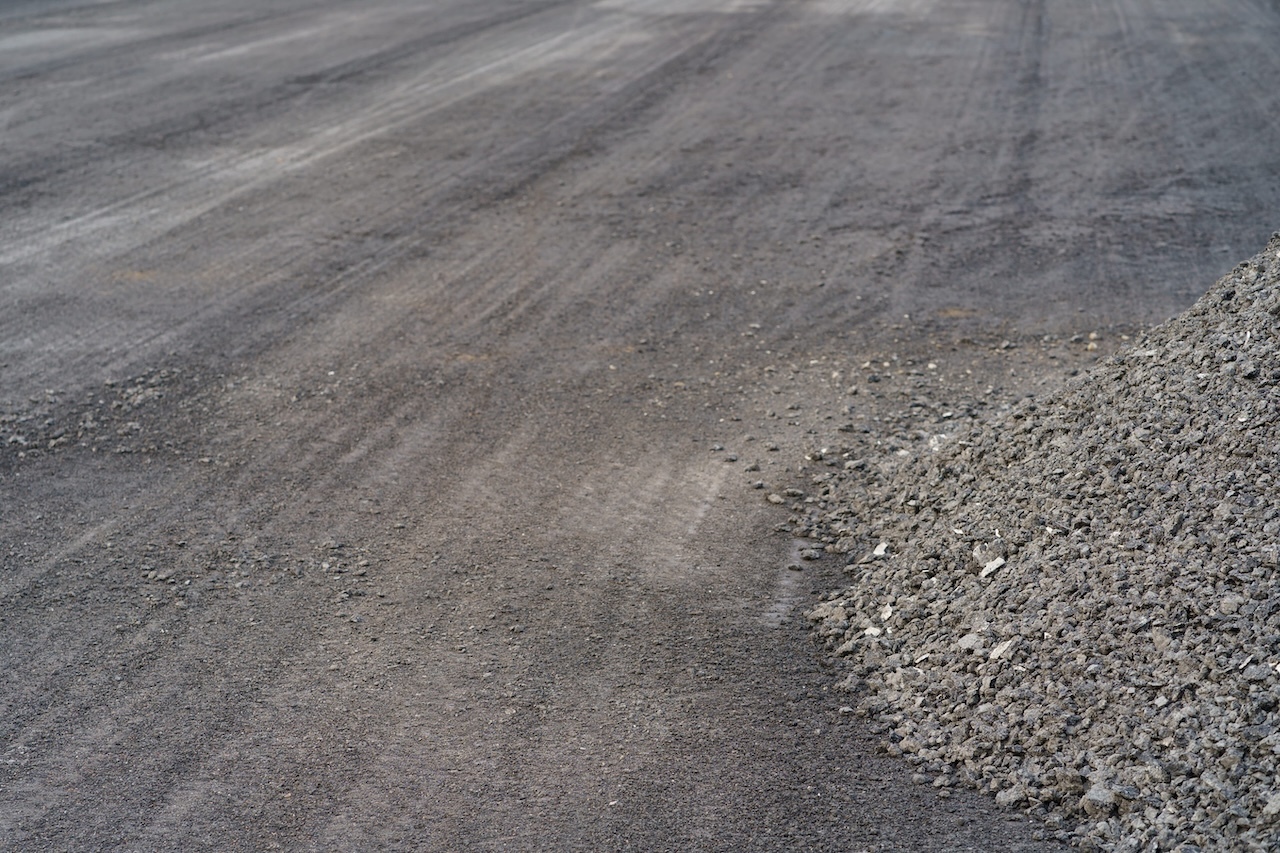
Aggregate strength refers to a material’s ability to resist crushing, impact and degradation under load. In structural applications, aggregates are subjected to significant stresses, whether from traffic loading in pavements or compressive forces within concrete, and their strength directly affects long‑term performance.
Unlike concrete, aggregates are not usually assigned a simple compressive strength value. Instead, aggregate compressive strength is assessed indirectly through mechanical tests that measure resistance to crushing and fragmentation.
These results indicate how well the material will maintain its integrity under repeated or sustained loading.
Stronger aggregates are less likely to break down during compaction or under service loads. This helps preserve the designed grading of the material, which in turn supports aggregate load bearing capacity and reduces the risk of settlement or rutting over time.
Understanding aggregate strength is therefore essential when selecting materials for structural layers where durability and performance are critical.
Aggregate strength is assessed through a series of standardised laboratory tests designed to measure resistance to crushing, impact and abrasion. These tests provide objective data to support specification and ensure consistent aggregate performance in construction.
One commonly used method is the Aggregate Crushing Value (ACV) test, which measures resistance to crushing under gradually applied compressive load. A lower ACV indicates a stronger aggregate with greater resistance to crushing.
The Ten Percent Fines Value (TFV) test is another measure of aggregate compressive strength. Instead of recording total crushing, it determines the force required to produce a specified percentage of fines. Higher values generally indicate stronger material.
Resistance to sudden shock or impact is assessed using the Aggregate Impact Value (AIV) test. This is particularly relevant in applications subject to dynamic or repeated loading.
For applications such as road construction, resistance to wear and degradation is also measured using the Los Angeles Abrasion test, which evaluates how aggregates perform under friction and mechanical stress.
Together, these aggregate strength testing methods help engineers and specifiers assess suitability for specific structural roles, ensuring that the selected material can maintain performance under anticipated load conditions.
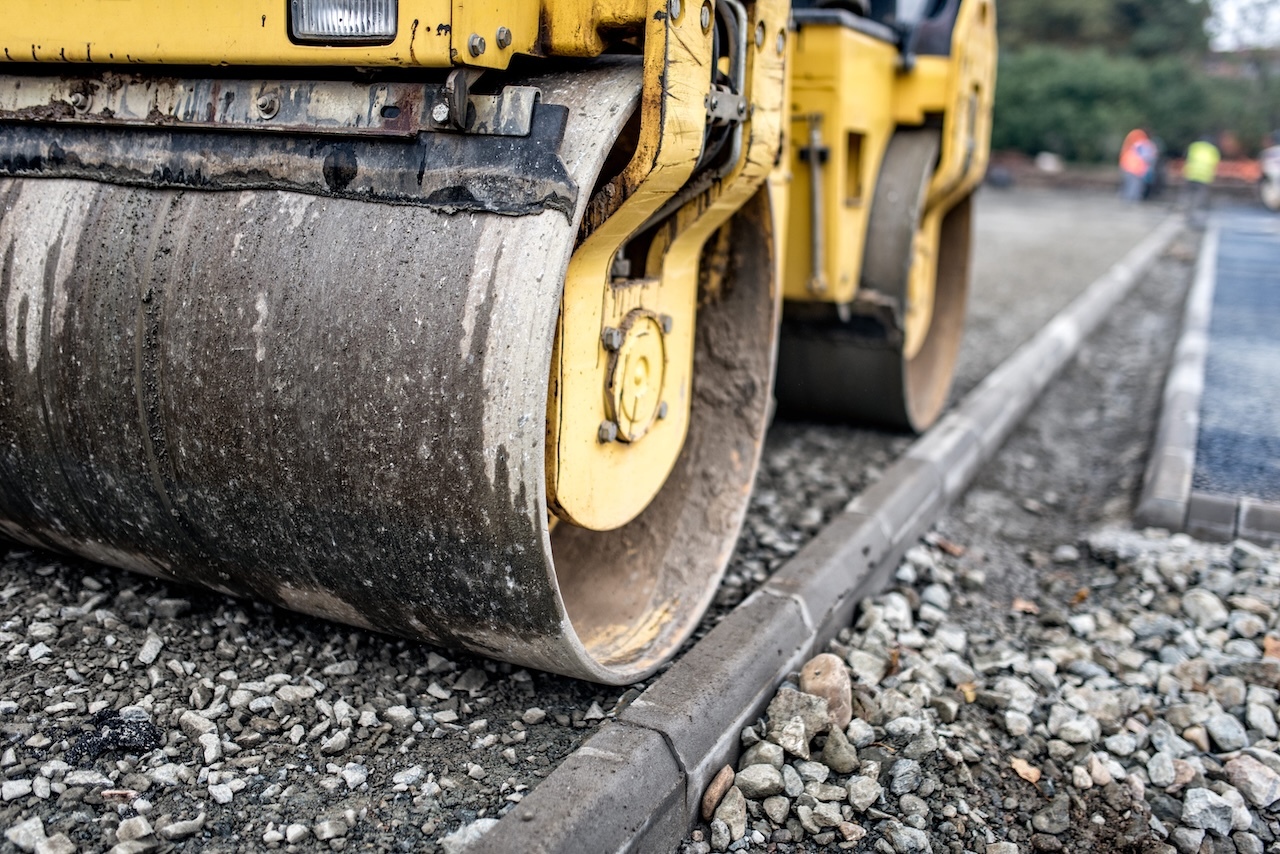
Aggregate density has a direct influence on how a material behaves once placed and compacted within a structural layer. The bulk density of aggregates affects how tightly particles pack together, the volume of voids within the layer, and ultimately its stability under load.
Higher‑density aggregates typically provide greater mass per unit volume, which can improve resistance to movement and settlement when properly compacted. In sub‑base and structural fill applications, this contributes to improved aggregate load bearing capacity and more consistent support for the layers above.
Density also plays a role in compaction efficiency. Well‑graded, suitably dense materials achieve lower void ratios when compacted, reducing the likelihood of long‑term consolidation or deformation. Conversely, materials with lower density or excessive void content may be more susceptible to movement under repeated loading.
In concrete and asphalt applications, the density of construction aggregates influences mix design, strength development and overall structural weight. Changes in aggregate density can alter the performance characteristics of the finished material, particularly in load‑bearing elements.
For these reasons, understanding aggregate density is not simply a matter of material quantity, it is fundamental to predicting and achieving reliable structural performance.
While density affects stability and compaction, aggregate strength determines how a material responds when subjected to sustained or repeated loading. In structural layers, aggregates must resist crushing and fragmentation in order to maintain their grading and structural integrity over time.
When aggregates break down under load, the particle size distribution changes. This can increase fines content, reduce interlock between particles, and ultimately lower aggregate load bearing capacity. In pavement construction, this may lead to rutting or surface deformation.
In structural fill, it can contribute to settlement and reduced stiffness within the layer.
High aggregate compressive strength helps ensure that particles remain intact during compaction and throughout their service life.
This is particularly important in heavily trafficked roads, industrial yards and foundation systems where loads are concentrated and repeated.
The results of aggregate strength testing therefore provide more than compliance data, they offer insight into how the material will perform under real structural demands. Selecting aggregates with appropriate crushing and abrasion resistance is essential for long‑term aggregate performance in construction.
The combined effect of aggregate density and aggregate strength becomes most apparent when materials are placed under structural demand.
In sub‑base construction, density governs how effectively a layer can be compacted and how evenly loads are distributed into the sub‑grade. Strength determines whether the aggregate will maintain its structure under traffic loading.
A dense but weak material may compact well initially but degrade over time, reducing long‑term performance.
In concrete production, the density of construction aggregates influences mix proportions and overall structural weight, while aggregate compressive strength contributes to the finished concrete’s ability to resist crushing and cracking. Weak or highly friable aggregates can compromise durability, even if the cement matrix is strong.
For structural fill and embankments, bulk density affects settlement behaviour and bearing pressure on underlying soils. At the same time, aggregate strength ensures that particles do not fracture under sustained loads, preserving the stiffness and integrity of the fill.
Across all applications, structural performance depends on selecting aggregates that are both suitably dense and mechanically robust.
Achieving reliable structural performance begins with sourcing aggregates that meet the required density, strength and specification standards.
Consistency in grading, controlled production processes and verified testing data all play a critical role in ensuring materials perform as designed.
At Armstrongs, we supply high‑quality construction aggregates from our own quarry operations, supporting civil engineering, commercial and infrastructure projects across the North West and further afield.
Our materials are produced under strict quality control procedures, with technical data available to assist engineers, contractors and procurement teams in meeting project specifications.
Whether the requirement is for structural fill, sub‑base materials or aggregates for concrete production, our team can advise on suitable products and arrange reliable bulk delivery direct to site.
Selecting the right aggregate is fundamental to long‑term performance and working with an experienced supplier helps ensure those standards are achieved from the ground up.
Get in touch with our team today for advice on choosing the right aggregates for your project.
Made by Statuo